Biblioteca / 1980-1989
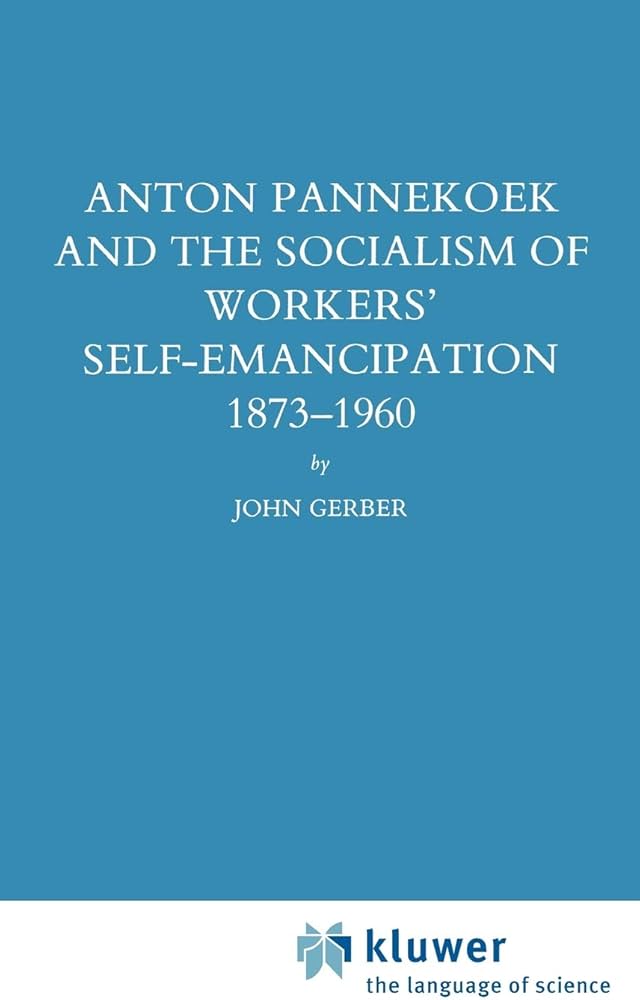
John Gerber. Anton Pannekoek and the Socialism of Workers’ Self-Emancipation, 1873-1960.
Dordrecht: Kluwer Academic Publishers – Amsterdam: International Institute of Social History, 1989.
xxv, 250 páginas.
CONTENTS
Introduction
Chapter I
The Making of a Socialist: The Milieu of Pannekoek’s Marxism
The Historical Context: Society and Social Democracy in the Netherlands
Struggling with Ideas: Pannekoek’s Conversion to Marxism
Rank-and-File Militant: Pannekoek and the SOAP in Leiden
Chapter II
Mind and Reality: Pannekoek’s Methodology
Pannekoek and Dietzgen: The Dialectics of Distinction
Theory and Social Development: The Class Basis of Science
Social Knowledge of a New Kind: Pannekoek’s Conception of Historical Materialism
Chapter III
Dutch Left Marxism in Formation: The Nieuwe Tijd Left, 1899-1906
From Romanticism to Marxism: The Origins of the Nieuwe Tijd Group
‘First Life, Then Theory’: The Trade Union, Agrarian, and School Debates
Deepening of the Split: The Dutch Mass Strike Wave of 1903 and its Aftermath
Chapter IV
Bringing Socialist Insight to the Masses, 1906-1909
The Berlin Years: Theoretical and Propaganda Work for the SPD
Intransigent Marxism on the Offensive: The Tribunist Left
Chapter V
Consciousness and Workers’ Self Emancipation: Pannekoek’s Political Thought prior to 1910
Consciousness and Socio-Economic Reality: Pannekoek’s Theory of Ideological Hegemony
Organization and Ideological Development: Pannekoek’s Conception of Revolutionary Praxis
Moral Consciousness and Social Transformation: Pannekoek’s Conception of Proletarian Ethics
Chapter VI
Struggling Marxism in Practice, 1910-1914
Break with the Marxist Center: Pannekoek Against Kautsky
Militants Against the Apparatus: The Bremen Left
‘Sect or Party?’ The Dutch SOP
Chapter VII
Mass Action and Revolution: Pannekoek’s Political Thought, 1910-1914
Revolution and Class Transformation: Pannekoek’s Theory of Mass Action
Economics and Social Development: Pannekoek’s Theory of Imperialism
Class Struggle and Nation: Pannekoek and the National Question
Chapter VIII
War and Revolution, 1914-1919
War Against War: Pannekoek and the Zimmerwald left
From Sect to Party: The SDP and the New Internationalism
Militants Against the Current: The Bremen Left and the Formation of German Communism
The New Socialism of the Laboring Masses: Pannekoek’s Political Thought, 1914-1919
Chapter IX
The Left Communist Alternative, 1920-1926
West European Marxismon on the Offensive: The Amsterdam Burea
Working Class Organization of the New Type: The KAPD and the AAUD
Pannekoek Against Lenin: Left Communism and the Comintern
Between Deventer and Moscow: The CPH and the Comintern
From Movement to Sect: Left Communism in Decline
Chapter X
A New Workers’ Movement in Formation: International Council Communism, 1927-1945
From Left Communism to Council Communism: The Origins of the GIC and GCC
The Permanent Crisis: The Theoretical Development of Council Communism in the Inter-War Period
Chapter XI
The World of the Workers’ Councils: Pannekoek and the Theory of Council Communism
The Workers’ Way to Freedom: Rebellion and Council Organization
Organization and Production: The Council State
Ideology and Social Reality: Pannekoek’s Philosophical Critique of Leninism
Chapter XII
Revolution and Reality: The Council Ideal in the Post-War Period
‘Hope is Far Distant’: Pannekoek and the Dilemma of the Independent Left
Re-thinking Marx: Pannekoek and the Rciconstruction of Revolutionary Theory and Practice
Unfulfilled Promise: Pannekoek in Historical Perspective
Bibliography